
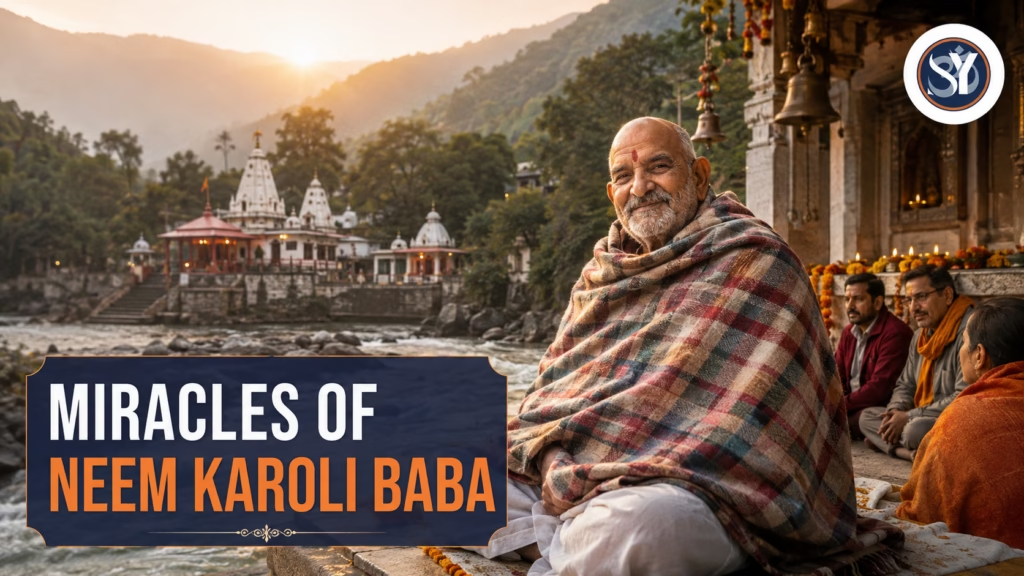
Miracles of Neem Karoli Baba-Neem Karoli Baba, lovingly known as Maharaj-ji, remains one of the most revered spiritual saints of modern India. Although he left his physical body in 1973, his presence continues to be felt by devotees across India and throughout the world. Stories of his compassion, divine insight, extraordinary intuition, healing blessings, and mysterious interventions have inspired generations of spiritual seekers.
Many devotees believe that Neem Karoli Baba could understand a person’s thoughts without being told, appear at the right moment during a crisis, heal suffering, and guide people from a distance. Such experiences are preserved mainly through personal testimonies, oral traditions, and books written by those who spent time with him. For believers, these accounts are not simply supernatural stories—they are expressions of faith, grace, and unconditional love.
Kainchi Dham, the peaceful ashram established by Maharaj-ji in the Kumaon hills of Uttarakhand, is now one of the most visited spiritual destinations associated with him. Travelers often choose organized Kainchi Dham Yatra Packages to experience the ashram, attend prayers, meditate in its sacred surroundings, and visit nearby temples connected with the region’s spiritual heritage.
This article explores the most famous miracles associated with Neem Karoli Baba while also examining the deeper teachings behind them.
Who Was Neem Karoli Baba?
Neem Karoli Baba was a Hindu saint and devotee of Lord Hanuman. The exact details of his early life remain surrounded by mystery, which was consistent with his simple and detached nature. He avoided personal publicity and rarely spoke about his identity, education, or spiritual achievements.
His followers called him Maharaj-ji and regarded him as a saint who embodied love, service, humility, and devotion. He established and inspired several temples and ashrams, including Kainchi Dham near Nainital.
Maharaj-ji did not promote a complicated spiritual philosophy. His teachings were direct and accessible:
- Love everyone
- Serve everyone
- Feed people
- Remember God
- Speak truthfully
- Help those in need
- Let go of ego
- See the divine in every person
His followers believe that the miracles associated with him were never performed for entertainment or fame. Instead, they appeared spontaneously to protect someone, awaken faith, teach humility, or relieve suffering.
Kainchi Dham: The Spiritual Heart of Maharaj-ji’s Legacy
Kainchi Dham is located in the Kumaon hills between Bhowali and Almora. The name “Kainchi” refers to the two sharp bends in the road near the ashram that resemble a pair of scissors.
The ashram was established in the 1960s and developed into an important center of devotion to Lord Hanuman. Surrounded by green hills and situated beside a flowing river, it offers an atmosphere of quietness and spiritual reflection.
Every year, large numbers of pilgrims visit the ashram, especially during its annual foundation-day celebration on 15 June. Devotees come to offer prayers, sit in silence, participate in devotional activities, and receive prasad.
Well-planned Kainchi Dham Yatra Packages can include transport from Delhi, Kathgodam, or nearby cities; comfortable accommodation; local sightseeing; and visits to spiritual destinations such as Naina Devi Temple, Hanuman Garhi, Golu Devta Temple, Jageshwar Dham, and Kasar Devi.
The Train That Would Not Move
One of the most famous stories associated with Neem Karoli Baba concerns a train journey. According to popular tradition, Maharaj-ji was once traveling on a train without a ticket. When the ticket examiner discovered this, he asked Baba to leave the train at a small station near the village of Neeb Karori.
After Maharaj-ji got down and sat quietly under a tree, the train reportedly failed to move. Railway employees inspected the engine and attempted repeatedly to restart the journey, but the train remained stationary.
Someone familiar with Baba is said to have suggested that the train would move only after the saint was invited back respectfully. Railway officials then approached him, apologized, and requested him to board again.
Maharaj-ji reportedly agreed on two conditions: railway authorities should treat holy people with respect, and a station should eventually be established near the village for the benefit of residents.
According to the devotional account, the train began moving soon after Baba returned.
This event is frequently linked with the name “Neem Karoli Baba,” derived from the village of Neeb Karori. Whether understood literally or symbolically, devotees view the story as a lesson in humility and respect rather than a display of power.
The Miracle of the Endless Food
Feeding people was central to Maharaj-ji’s spiritual approach. Many stories describe situations in which food prepared for a limited number of people appeared sufficient for a much larger gathering.
During religious events and community meals, organizers occasionally became worried that the available food would run out. Maharaj-ji would reportedly remain calm and instruct them to continue serving.
Devotees remembered that everyone received food and that some food was occasionally left over. Similar accounts are associated with the traditional Indian belief that food offered with devotion becomes blessed and abundant.
The deeper message of these stories is clear: when service is performed with faith, generosity, and selflessness, fear of scarcity should not prevent people from helping others.
Community meals continue to be an important part of devotional gatherings associated with Maharaj-ji. Visitors traveling through Kainchi Dham Yatra Packages may witness how hospitality, prasad, and service remain essential parts of the ashram’s spiritual culture.
Water Turning into Fuel
Another widely shared story concerns a shortage of fuel during a religious gathering at Kainchi Dham. According to devotees, the organizers needed fuel to prepare food but discovered that their supply was insufficient.
Maharaj-ji reportedly asked them to bring water from the nearby river and pour it into the containers. The water was then said to function like fuel, allowing the food preparation to continue.
After the event, Baba is believed to have instructed the organizers to replace the quantity taken by purchasing and returning the same amount of fuel to the river symbolically.
For devotees, this story demonstrates Maharaj-ji’s ability to provide what was needed in a moment of sincere service. It also contains an ethical lesson: divine help should never become an excuse to take something without restoring balance.
The focus was not personal gain. The reported miracle occurred so that hungry people could be fed.
Maharaj-ji’s Knowledge of Unspoken Thoughts
Many people who met Neem Karoli Baba described how he appeared to know their thoughts, concerns, or private experiences before they said anything.
A visitor might arrive with a question but remain too hesitant to ask. Maharaj-ji would begin speaking about precisely the subject troubling that person. At other times, he reportedly referred to private family matters or events that had happened far away.
Devotees interpreted this as evidence of his extraordinary spiritual awareness. They believed that his consciousness was not limited by ordinary communication.
However, Maharaj-ji did not encourage fascination with psychic abilities. His responses usually redirected visitors toward love, prayer, responsibility, service, and remembrance of God.
The lesson behind these experiences was often more important than the unexplained knowledge itself. Devotees felt fully seen and understood, sometimes for the first time in their lives.
The Blanket and the Soldier
One of the most touching stories associated with Neem Karoli Baba involves an elderly couple whose son was serving as a soldier.
According to the devotional account, Maharaj-ji once visited the couple’s home and stayed overnight. He asked for a blanket and appeared extremely restless while sleeping. The couple reportedly heard him groaning and moving as if he were experiencing great physical suffering.
The following morning, Maharaj-ji gave them the blanket and asked that it be placed in a river without being opened. The couple followed his instructions.
Later, their son returned home and described how he had survived intense enemy fire during the same night. Although people around him had been harmed, he had remained miraculously protected.
The parents then connected their son’s experience with Maharaj-ji’s unusual behavior under the blanket. Devotees believe that Baba had absorbed or endured the danger to protect the soldier.
This account continues to be remembered as an example of selfless compassion—a saint taking on another person’s suffering without seeking recognition.
The Story of the Burning Heat
Several devotees recalled that Maharaj-ji appeared unaffected by extremes of heat or cold. He was often seen wearing a simple blanket regardless of the season.
In one popular story, he sat near an intense fire or in an environment that should have been physically unbearable. Yet he reportedly remained completely calm and unharmed.
Such accounts are interpreted within yogic traditions as signs of control over physical sensation. Maharaj-ji himself, however, rarely offered explanations for extraordinary occurrences.
His simplicity discouraged people from focusing on supernatural abilities. He appeared more interested in whether a person was kind, honest and willing to serve others.
Healing Through Grace and Faith
Numerous followers have shared personal accounts of healing after meeting Neem Karoli Baba, receiving his blessing, or praying before his photograph.
Some stories involve recovery from illness, while others describe relief from emotional pain, anxiety, grief, or hopelessness. In certain accounts, Baba reportedly advised someone to take a specific action, visit a doctor, or change an unhealthy habit.
These stories should be understood as devotional testimonies rather than substitutes for medical evidence. Travelers and devotees should always seek appropriate professional treatment for physical or mental health conditions.
From a spiritual perspective, Maharaj-ji’s healing influence often came through the sense of being loved unconditionally. Many people felt that his presence removed fear and gave them the courage to face difficult circumstances.
The real “healing” was sometimes physical, but at other times it was a transformation in attitude, faith, or emotional strength.
Protecting Devotees from Accidents
Many devotees have reported feeling protected during dangerous situations after remembering Maharaj-ji or calling his name.
Accounts include narrow escapes from road accidents, sudden guidance during travel, unexpected help from strangers, and last-minute changes that prevented people from entering unsafe situations.
Believers often interpret these incidents as Maharaj-ji’s continuing protection. Others may understand them as coincidence, intuition or the psychological strength produced by faith.
Whatever the interpretation, these stories have encouraged devotees to develop gratitude and a deeper sense of responsibility. Faith in divine protection should never encourage reckless behaviour. Pilgrims must still follow traffic rules, weather advisories and practical safety precautions.
Those selecting Kainchi Dham Yatra Packages should choose experienced drivers, verified operators and realistic mountain itineraries rather than depending on faith alone for safe travel.
Maharaj-ji Appearing in More Than One Place
Some accounts claim that Neem Karoli Baba was seen in different places at or near the same time. Devotees visiting one ashram would later discover that others had reportedly met him elsewhere.
Bilocation—the idea that an advanced spiritual being can appear in more than one location—is found in the traditions surrounding several saints. Maharaj-ji never publicly claimed such an ability.
For his followers, these stories suggest that a realised saint is not limited by the ordinary boundaries of space. They also reinforce the belief that Maharaj-ji could reach devotees whenever they genuinely needed him.
The Story of Ram Dass
Neem Karoli Baba became internationally known partly through the experiences of American spiritual teacher Ram Dass, formerly known as Dr Richard Alpert.
When Ram Dass first met Maharaj-ji in India, he was carrying thoughts of his mother, who had died from an illness. According to Ram Dass’s recollection, Maharaj-ji referred to personal details surrounding her death that he believed Baba could not have known through ordinary means.
This experience deeply affected him. He came to see Maharaj-ji as an embodiment of unconditional love and eventually shared his teachings with a global audience.
Ram Dass’s books and lectures introduced many Western spiritual seekers to Neem Karoli Baba and Indian devotional traditions. His writings did not present Maharaj-ji merely as a miracle worker. Instead, they emphasised the transformative experience of being loved without judgment.
Steve Jobs and the Journey to Kainchi Dham
Apple co-founder Steve Jobs travelled to India in the 1970s seeking spiritual understanding and reportedly intended to meet Neem Karoli Baba. However, Maharaj-ji had already left his physical body before Jobs arrived.
Jobs nevertheless spent time in the region and encountered the atmosphere and teachings associated with the saint. His journey later became part of the popular international history of Kainchi Dham.
Years later, Facebook co-founder Mark Zuckerberg publicly said that Jobs had advised him to visit the temple in India during a difficult period in Facebook’s development. Zuckerberg subsequently visited the area.
These connections have contributed to Kainchi Dham’s worldwide recognition. However, the ashram’s spiritual significance is much greater than its association with technology leaders. It remains fundamentally a place of devotion, simplicity, discipline and service.
Visitors booking Kainchi Dham Yatra Packages should approach the ashram as pilgrims rather than as tourists searching for a formula for material success.
Miracles Experienced After Maharaj-ji’s Mahasamadhi
Devotees believe that Neem Karoli Baba’s blessings continued after his passing in 1973. Many people who never met him physically have reported vivid dreams, sudden answers to prayers, inner guidance or unexpected assistance.
Some describe seeing his photograph for the first time and feeling an immediate sense of familiarity. Others say they were drawn to Kainchi Dham after repeatedly encountering his name, teachings or image.
These experiences are deeply personal and cannot always be verified objectively. Yet for devotees, their emotional and spiritual impact is real. They feel that Maharaj-ji’s physical absence does not limit his ability to guide sincere seekers.
The Greatest Miracle: Transforming Human Hearts
The most important miracle associated with Neem Karoli Baba may not involve trains, fuel, food or supernatural knowledge. It may be his ability to transform people.
Those who met him often reported becoming more compassionate, patient, humble and willing to serve others. His presence encouraged people to examine their ego and recognise the divine within every human being.
A dramatic event can create temporary amazement, but a changed heart can influence an entire lifetime. Maharaj-ji’s central message was not to chase miracles but to practise love.
He taught through his behaviour:
- Feed a hungry person
- Comfort someone in distress
- Speak kindly
- Remember God
- Perform your duties honestly
- Do not judge people by status or background
- Serve without expecting praise
These simple acts may be considered everyday miracles because they transform both the giver and the receiver.
Why Devotees Visit Kainchi Dham
People visit Kainchi Dham for many reasons. Some come after hearing stories of Maharaj-ji’s miracles. Others seek peace, emotional healing, guidance or relief from the pressure of daily life.
The ashram attracts:
- Devotees of Neem Karoli Baba
- Worshippers of Lord Hanuman
- Spiritual seekers
- Families seeking blessings
- Meditation practitioners
- International visitors
- People facing personal or professional difficulties
- Pilgrims exploring Kumaon’s sacred destinations
The calm surroundings can help visitors slow down and reflect. The flowing river, forested hills, temple bells and devotional atmosphere create a natural environment for prayer.
Professionally arranged Kainchi Dham Yatra Packages can simplify transportation and accommodation, allowing visitors to concentrate on their spiritual experience.
What to Expect During a Kainchi Dham Visit
Kainchi Dham is a functioning spiritual ashram rather than a commercial tourist attraction. Visitors should behave respectfully and follow its rules.
General etiquette includes:
- Wearing modest clothing
- Maintaining silence where requested
- Following instructions regarding photography
- Keeping the premises clean
- Avoiding loud conversations
- Respecting prayer and meditation spaces
- Accepting prasad respectfully
- Not disturbing resident devotees
- Avoiding claims of privileged access
- Refraining from commercial activity inside the ashram
Visitors should confirm current opening hours and entry arrangements before travelling because local rules may change during festivals, maintenance, heavy crowds or official restrictions.
Best Time to Book Kainchi Dham Packages
Kainchi Dham can be visited during much of the year, although each season offers a different experience.
March to June
The weather is usually pleasant, and the surrounding hills are vibrant. This is also a busy travel period. The annual foundation-day celebration on 15 June attracts exceptionally large crowds.
July to September
The monsoon makes Kumaon green and beautiful, but heavy rainfall may cause slippery roads, traffic delays or landslide risks. Travellers should monitor official advisories.
October to November
Clear skies, cool weather and comparatively peaceful surroundings make autumn attractive for spiritual travel.
December to February
Winter offers a quieter atmosphere, but mornings and nights can be very cold. Fog or winter weather may affect road travel.
A good Kainchi Dham Yatra Packages should consider the traveller’s age, health, preferred comfort level and interest in nearby destinations.
Places to Combine with Kainchi Dham
A spiritual journey can include several nearby attractions:
Naina Devi Temple
Located in Nainital, this revered Shakti temple overlooks Naini Lake and is an important pilgrimage destination.
Hanuman Garhi
A peaceful Hanuman temple known for its devotional atmosphere and beautiful sunset views.
Golu Devta Temple
Golu Devta is widely worshipped in Kumaon as a deity associated with justice. The temple is famous for thousands of bells and written petitions offered by devotees.
Jageshwar Dham
Jageshwar is a remarkable group of ancient Shiva temples surrounded by deodar forests. It is ideal for travellers seeking history, architecture and meditation.
Kasar Devi
Known for its tranquil surroundings and spiritual associations, Kasar Devi has attracted saints, thinkers, artists and seekers for many decades.
Mukteshwar
Mukteshwar offers a historic Shiva temple, Himalayan views, and a peaceful hill environment.
Extended Kainchi Dham Yatra Packages may combine these destinations with Nainital, Bhimtal, Almora, or Ranikhet.
Choosing the Right Kainchi Dham Package
Before booking, check whether the package includes:
- Pick-up and drop-off location
- Private or shared vehicle
- Hotel category
- Meal plan
- Number of nights
- Local sightseeing
- Driver allowance
- Parking and toll charges
- Assistance during route changes
- Cancellation terms
- Festival-period conditions
Select a verified travel organizer and request a written itinerary. During busy dates, accommodation near Kainchi Dham may be limited, so early booking is recommended.
Premium Kainchi Dham Yatra Packages can include comfortable hotels, private transport, flexible sightseeing, and carefully planned visits to nearby spiritual destinations.
Frequently Asked Questions
Are the miracles of Neem Karoli Baba historically verified?
Most miracle stories come from devotees’ recollections, oral traditions, and published personal accounts. They are matters of faith and spiritual interpretation rather than scientifically verified events.
Why is Neem Karoli Baba associated with Lord Hanuman?
Maharaj-ji was deeply devoted to Lord Hanuman and inspired the construction of several Hanuman temples. His teachings reflected Hanuman’s qualities of service, devotion, strength, and humility.
Can visitors stay inside Kainchi Dham Ashram?
Stay arrangements and visitor policies may be restricted and can change. Most tourists and pilgrims book hotels in nearby areas such as Bhowali, Bhimtal, or Nainital.
Is photography allowed inside Kainchi Dham?
Photography may be restricted in parts of the ashram. Visitors should follow the instructions displayed at the premises and avoid photographing prayer areas without permission.
How many days are suitable for a Kainchi Dham trip?
A short visit may be completed within two or three days from Delhi, while four- to six-day itineraries can include Nainital, Jageshwar, Almora, Mukteshwar, and other nearby destinations.
Are Kainchi Dham packages suitable for senior citizens?
Yes, provided the itinerary includes comfortable transport, sufficient rest and appropriate accommodation. Senior citizens should consult a doctor if they have significant health concerns.
Final Thoughts – Miracles of Neem Karoli Baba
The miracles of Neem Karoli Baba continue to inspire faith because they are closely connected with compassion, protection, humility and service. Stories of the motionless train, endless food, healing blessings, unspoken thoughts and protection during danger fascinate devotees, but Maharaj-ji’s true legacy goes much deeper.
He taught that spirituality is expressed through love. Feeding someone, comforting the distressed, speaking truthfully, and serving without ego were more important than displaying supernatural power.
A visit to Kainchi Dham offers an opportunity to move beyond the stories and experience the values Maharaj-ji represented. By choosing thoughtfully organized Kainchi Dham Yatra Packages , pilgrims can travel comfortably, visit nearby sacred places, and devote more time to prayer and reflection.
Whether one interprets the stories as literal miracles, symbolic teachings, or personal expressions of faith, Neem Karoli Baba’s enduring influence is undeniable. His simple message continues to cross religious, cultural, and national boundaries:
Love everyone, serve everyone, feed people, and remember God.
Note: Stories of miracles are based primarily on devotional traditions and personal accounts. Visitors should approach them with respect while forming their own spiritual understanding. Ashram timings, entry arrangements, accommodation policies and local travel conditions should be verified before departure.


