
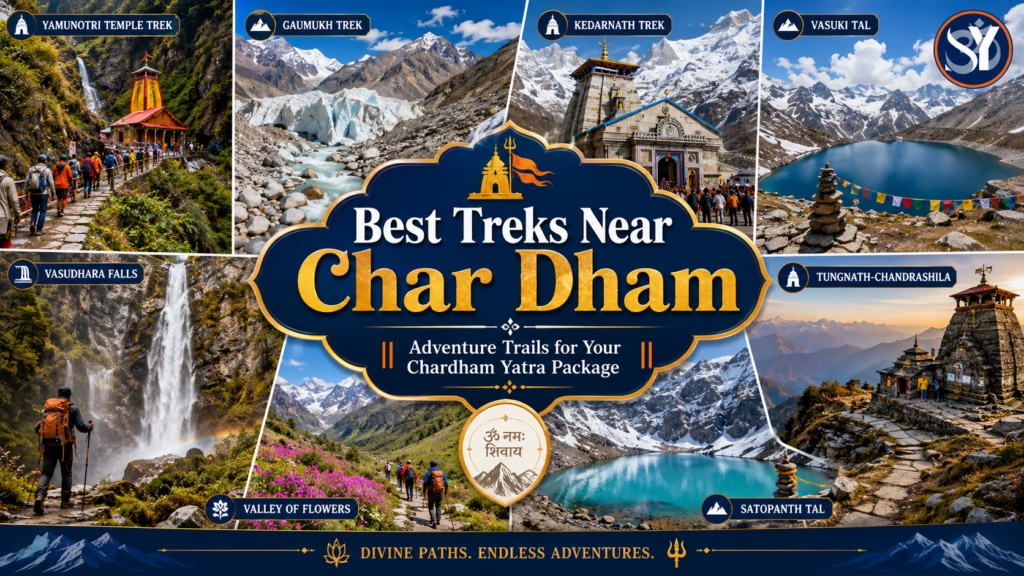
Best Treks Near Char Dham-The Char Dham Yatra of Uttarakhand is widely known as a journey of faith, devotion and spiritual transformation. Every year, pilgrims travel through the Garhwal Himalayas to seek blessings at Yamunotri, Gangotri, Kedarnath and Badrinath. These four sacred destinations are surrounded by glaciers, alpine meadows, ancient forests, high-altitude lakes, waterfalls and snow-covered mountains that also make the region one of India’s finest trekking destinations.
For travellers who enjoy walking through nature, a Char Dham pilgrimage can become more than a temple journey. Several short hikes and challenging expeditions begin near the four Dhams or along their traditional routes. Some take visitors to the source of holy rivers, while others lead to glacial lakes, sacred caves and remote Himalayan meadows.
A thoughtfully planned Chardham Yatra Package can include selected treks according to the traveller’s fitness, available time and previous mountain experience. However, trekking in the Char Dham region requires careful planning. High altitude, rapidly changing weather, forest regulations, route restrictions and limited facilities make it important to choose the right trail and travel with experienced local support.
Why Combine Trekking with a Char Dham Yatra?
The Char Dham temples are located amid some of the most dramatic landscapes in Uttarakhand. While roads and pilgrimage facilities have made many areas more accessible, trekking allows travellers to experience the silence and natural beauty that shaped the spiritual identity of the Himalayas.
Walking through mountain trails encourages patience and mindfulness. The sound of rivers, the sight of glaciers and the effort required to climb gradually turn the journey inward. Many pilgrims find that temple darshan becomes more meaningful after they have physically travelled through the sacred landscape surrounding the shrine.
Trekking also reveals places that cannot be experienced from a vehicle. Remote waterfalls, high-altitude lakes, birch forests and viewpoints remain accessible only on foot.
The official Uttarakhand Tourism description of the Char Dham identifies Yamunotri, Gangotri, Kedarnath and Badrinath as four sacred destinations nestled in the Himalayas. This setting naturally creates opportunities for hiking and trekking around each Dham.
Travellers booking a Chardham Yatra Package should remember that adding treks may require extra nights. A standard pilgrimage itinerary is usually designed around temple visits and long road journeys. Attempting a difficult trek without increasing the duration can lead to exhaustion and altitude-related problems.
1. Yamunotri Temple Trek
The journey from Janki Chatti to Yamunotri Temple is itself one of the most important treks of the Char Dham circuit. It is usually the first significant walking experience for pilgrims following the traditional west-to-east route.
The path climbs through the narrow Yamuna valley, passing forests, mountain settlements, waterfalls and resting points. Pilgrims may walk, use ponies or hire palanquins where available, but those who complete the route on foot gain a deeper appreciation of Yamunotri’s remote location.
The trail can be demanding for first-time pilgrims because of the steady ascent. Crowds, rain and slippery sections may also increase the difficulty. Starting early in the morning is generally more comfortable than beginning during the busy afternoon hours.
This trek is suitable for families and ordinary pilgrims when undertaken slowly. Elderly travellers and people with medical concerns should assess their fitness before walking and use authorised assistance where necessary.
A customised Chardham Yatra Package should provide an overnight stay close enough to Janki Chatti so that pilgrims can begin the trek early rather than reaching the base after a long drive.
2. Saptrishi Kund Trek Near Yamunotri
Saptrishi Kund is a remote high-altitude glacial lake associated with the source region of the Yamuna. It is located beyond the main Yamunotri pilgrimage area and is regarded as a difficult expedition rather than an ordinary extension of temple darshan.
The route passes through steep, isolated and rugged terrain. There may be no clearly developed path throughout the journey, and trekkers can encounter boulders, moraine, snow and unpredictable weather.
Saptrishi Kund is traditionally associated with seven ancient sages who are believed to have performed meditation in the region. The trek therefore combines mythology, wilderness and the search for the river’s remote Himalayan origin.
This journey is suitable only for experienced trekkers with proper acclimatisation, camping arrangements, local guides and suitable equipment. It should not be attempted casually by pilgrims who have just completed the Yamunotri Temple trek.
A regular Chardham Yatra Package generally does not include Saptrishi Kund. Travellers interested in this expedition should plan it as a separate trekking programme with additional days and specialist support.
3. Bali Pass Trek
Bali Pass is one of the most demanding high-altitude treks connected with the Yamunotri region. It links the Har Ki Dun side of the western Garhwal Himalayas with the Yamunotri valley.
The trail is known for dramatic views of peaks such as Swargarohini, Bandarpoonch and Kala Nag. Uttarakhand Tourism describes Bali Pass as a challenging high-altitude route connecting Har Ki Dun with Yamunotri and highlights its views of these major Himalayan peaks.
This trek passes through forests, meadows, remote villages, river valleys and steep alpine terrain before reaching the high pass. The crossing can involve narrow paths, snow and significant exposure.
Bali Pass is not suitable for beginners. Trekkers need excellent physical fitness, prior high-altitude experience and the ability to manage long walking days. Acclimatisation and professional guidance are essential.
Adventure travellers can combine the trek with Yamunotri darshan, but it should be treated as a full expedition rather than a brief add-on. A standard pilgrimage itinerary would need to be extended considerably.
4. Gaumukh Trek Near Gangotri
Gaumukh is one of the most spiritually and geographically important treks near Char Dham. It leads from Gangotri towards the snout of the Gangotri Glacier, which is traditionally regarded as the source of the Bhagirathi River.
Uttarakhand Tourism states that Gaumukh is approximately 19 kilometres from Gangotri and is accessible by trekking. The Uttarkashi district administration places it at an altitude of about 4,023 metres and identifies it as the source of the Bhagirathi in the Gangotri Glacier.
The trail generally passes through Chirbasa and Bhojbasa. Trekkers walk beside the Bhagirathi River through pine and birch landscapes before entering more barren glacial terrain.
Gaumukh carries immense religious significance. Pilgrims who have offered prayers at Gangotri Temple often feel deeply moved when they see the glacier from which the river emerges.
Despite its spiritual importance, this is a high-altitude trek. The distance, cold weather and reduced oxygen make it unsuitable for an unprepared day excursion. Most travellers require a planned itinerary with acclimatisation and an overnight halt.
Entry into Gangotri National Park is regulated, and permits or daily limits may apply. Travellers must verify the current procedure before departure rather than relying on old information.
An extended Chardham Yatra Package can include Gaumukh for physically fit travellers, but extra days should be kept around Gangotri.
5. Gaumukh–Tapovan Trek
Tapovan lies above Gaumukh and is one of the most spectacular high-altitude meadows in the Gangotri region. The trek offers close views of Shivling Peak and other major mountains surrounding the glacier.
Gangotri National Park is officially described as home to the popular Gaumukh–Tapovan trekking route. Uttarakhand Tourism notes that the trail offers forests, meadows and glacier scenery.
The section between Bhojbasa and Gaumukh becomes steeper, and the climb beyond Gaumukh may involve moraine, rocks and glacier-related terrain. Uttarakhand Tourism’s trek information highlights stream crossings, boulder sections and steep gradients along the route.
Tapovan has long been associated with saints, ascetics and meditation. The open meadow beneath towering Himalayan peaks creates an atmosphere of isolation and spiritual intensity.
This trek requires more experience than the Gaumukh journey alone. Glacial routes may change, and crossing them without a knowledgeable guide can be dangerous. Travellers must also be prepared for very cold nights and rapid weather changes.
A Chardham Yatra Package that includes Tapovan must be designed as a trekking-focused itinerary rather than a conventional road pilgrimage.
6. Kedar Tal Trek Near Gangotri
Kedar Tal is a high-altitude glacial lake situated in the Gangotri region. Surrounded by peaks such as Thalay Sagar and Bhrigupanth, it is known for dramatic scenery and demanding terrain.
Uttarakhand Tourism identifies Kedar Tal as a challenging glacial-lake trek near Gangotri, best suited to seasoned trekkers.
The route typically begins around Gangotri and moves through steep, rocky and exposed mountain sections. Unlike the main Gaumukh trail, the journey to Kedar Tal can feel much more isolated.
The trek requires strong fitness, careful acclimatisation and confidence on rough terrain. It should not be attempted immediately after a long road journey without allowing the body to adjust to Gangotri’s altitude.
Kedar Tal is especially rewarding for experienced trekkers who enjoy remote lakes and close mountain views. However, it is not appropriate for ordinary pilgrims seeking a simple extension after Gangotri darshan.
7. Kedarnath Temple Trek
The trek from Gaurikund to Kedarnath Temple is the most famous trek in the Char Dham circuit. It takes pilgrims through the Mandakini valley towards one of India’s most revered Shiva temples.
Official Uttarakhand Tourism information gives varying route estimates depending on the source and route description, generally placing the present journey in the range of approximately 16 to 19 kilometres. The Panch Kedar circuit page describes an uphill trek of around 19 kilometres, while a recent official tourist-guide article refers to approximately 16 kilometres. Route alignments and measured distances can change, so pilgrims should follow current local guidance.
The trail includes steep climbs, waterfalls, resting points and views of the Mandakini valley. Weather can shift quickly, and rain may make the stone or paved sections slippery.
Although thousands of pilgrims complete the trek each season, it should not be underestimated. The continuous ascent, high altitude and crowded conditions can be exhausting.
Pilgrims should begin early, carry minimal luggage and avoid rushing. Travellers who are unable to walk the entire route may consider authorised ponies, palanquins or helicopter services, subject to availability and official regulations.
A reliable Chardham Yatra Package should allow sufficient rest before and after the Kedarnath trek. Completing the climb and immediately undertaking a long road journey the next morning can be physically difficult.
8. Vasuki Tal Trek Above Kedarnath
Vasuki Tal is a beautiful high-altitude lake situated above Kedarnath. The trek begins from the Kedarnath area and climbs through steep Himalayan terrain.
Uttarakhand Tourism offers a Kedarnath–Vasuki Tal trekking itinerary and describes the journey as an extension of the pilgrimage route. The official itinerary places Kedarnath at approximately 3,584 metres and treats Vasuki Tal as a multi-day trekking experience.
The lake is associated with Lord Vishnu and the serpent Vasuki in local religious tradition. The route provides views of surrounding snow peaks and the upper Mandakini region.
This trek is significantly more difficult than the main Kedarnath pilgrimage. Trekkers must deal with a steep climb, high altitude, limited shelter and rapidly changing weather.
Only fit and properly acclimatised travellers should attempt it. A local guide is strongly recommended because the trail may be unclear in sections and weather can reduce visibility.
Vasuki Tal is ideal for experienced trekkers who wish to spend extra time in the Kedarnath region rather than returning immediately after darshan.
9. Chorabari Tal Trek Near Kedarnath
Chorabari Tal, historically known as Gandhi Sarovar, lies in the high-altitude area above Kedarnath. The region is associated with the Chorabari Glacier and the upper Mandakini landscape.
The trail has been affected by natural events and route changes over the years. Access conditions may vary, and travellers should obtain current local advice before attempting the hike.
Where officially accessible, the trek offers an opportunity to explore the glacial environment surrounding Kedarnath. It also gives pilgrims a wider understanding of the geography that shapes the Mandakini River valley.
This should not be treated as an automatic sightseeing excursion. Weather, damaged paths or local restrictions may make access unsafe or unavailable.
Travellers should never proceed merely because an old website or travel video shows the route as open.
10. Tungnath and Chandrashila Trek
Tungnath is one of the Panch Kedar temples and lies in the wider Kedarnath region. Although it is not immediately beside Kedarnath Temple, it can be included while travelling through Rudraprayag district.
The trek begins from Chopta and climbs through meadows and rhododendron forests to Tungnath Temple. From Tungnath, trekkers may continue towards Chandrashila, subject to trail and weather conditions.
The route is shorter than many high-altitude expeditions, but its steep gradient can still be tiring. Chandrashila offers panoramic views of major Himalayan peaks when the weather is clear.
This is one of the best options for travellers who want a manageable adventure during a longer Chardham Yatra Package. It combines temple worship, meadow landscapes and mountain views without requiring a week-long expedition.
Snow may remain on the trail early or late in the season, while monsoon rain can make the path slippery. Local conditions should always be checked before starting.
11. Vasudhara Falls Trek Near Badrinath
Vasudhara Falls is one of the most accessible and rewarding treks near Badrinath. The route begins beyond Mana, the village located close to Badrinath.
Uttarakhand Tourism identifies Mana as a base for several hikes and treks, including Vasudhara Falls, Satopanth Lake and Swargarohini.
The trail climbs through a broad mountain valley with views of surrounding peaks and the upper Alaknanda region. The waterfall appears to descend from a dramatic rocky slope and has deep religious importance in local tradition.
Although the trail is less technical than Satopanth, the altitude and exposed sections can still make it demanding. There is limited shade, so travellers should carry water, sun protection and warm layers.
Vasudhara Falls is suitable for active pilgrims who have an additional day near Badrinath. It is easier to include in a Chardham Yatra Package than most multi-day expeditions.
12. Satopanth Tal Trek
Satopanth Tal is among the most spiritually significant high-altitude lakes near Badrinath. Its triangular shape is traditionally associated with Brahma, Vishnu and Shiva.
Uttarakhand Tourism describes Satopanth as a challenging trek of about 25 kilometres from Badrinath. The trail passes Mana and Vasudhara Falls before entering increasingly remote alpine terrain.
The official trek page presents Satopanth Lake as a seven-day itinerary with multiple trekking days, making it clear that this is not a simple day hike.
The route offers glacier scenery, waterfalls, high-altitude camps and views of the surrounding peaks. It also passes through a landscape connected with the legendary final journey of the Pandavas.
Satopanth requires camping, acclimatisation and experienced guides. Snow, moraine and harsh weather can make the trail difficult. The journey should be undertaken only during the appropriate season and after checking local permissions.
For experienced trekkers, Satopanth can become the highlight of an extended Badrinath pilgrimage.
13. Swargarohini Route
The Swargarohini trail beyond Mana is linked in Hindu tradition with the Pandavas’ final journey towards heaven. It passes through the sacred upper reaches beyond Badrinath and Satopanth.
This route is remote, extremely demanding and suitable only for specialised expeditions. The terrain may include glaciers, moraine, snowfields and areas without ordinary trekking infrastructure.
Uttarakhand Tourism lists Swargarohini among the trekking possibilities associated with Mana, but its mention should not be interpreted as meaning that the complete route is suitable for casual tourists.
The spiritual symbolism of the region is powerful, yet safety must take priority over ambition. Travellers should never attempt to proceed into remote glacial areas without professional support and official clearance.
14. Valley of Flowers Trek
The Valley of Flowers is not directly beside Badrinath Temple, but it lies within the broader Chamoli pilgrimage region and can be added to an extended Badrinath itinerary.
The trail leads from Govindghat towards Ghangaria, which serves as the base for visits to the valley. Inside the national park, visitors walk through alpine landscapes known for seasonal wildflowers and mountain scenery.
Uttarakhand Tourism describes the Valley of Flowers route as moderate to challenging. It also states that overnight camping inside the valley is not allowed and visitors must return to Ghangaria by the prescribed time.
The trek requires additional days and should not be squeezed into a rushed Badrinath schedule. During the monsoon flowering season, rain and slippery paths are common.
For travellers interested in both pilgrimage and biodiversity, adding the Valley of Flowers to a Chardham Yatra Package can create an exceptional combination of spirituality and nature.
Choosing the Right Trek
The best trek depends on fitness, experience and available time.
First-time pilgrims may prefer the regular Yamunotri and Kedarnath temple treks, along with a shorter excursion to Vasudhara Falls or Tungnath.
Moderately experienced trekkers can consider Gaumukh, Valley of Flowers or Chandrashila with proper preparation.
Experienced high-altitude trekkers may explore Tapovan, Kedar Tal, Vasuki Tal, Satopanth or Bali Pass.
Travellers should not choose a trek solely because photographs make it appear beautiful. Altitude, weather and terrain are more important than distance alone. A short, steep trail above 4,000 metres may be harder than a much longer walk at lower elevation.
Best Time for Treks Near Char Dham
Most trekking routes in the Char Dham region are seasonal. Snow can block high-altitude trails early in the year, while monsoon rains may cause landslides, swollen streams and slippery paths. Post-monsoon conditions may offer clearer views, but temperatures become colder as winter approaches.
There is no universally safe month for every trek. Gaumukh, Valley of Flowers, Kedarnath and Satopanth each have different seasonal considerations.
Travellers should check the latest official weather, road, permit and forest information shortly before departure.
Char Dham registration is currently available through Uttarakhand’s official Tourist Care system, and pilgrims should complete the required process applicable to their journey.
Essential Safety Tips
High-altitude trekking should never be rushed. Pilgrims should allow time for acclimatisation and report symptoms such as severe headache, dizziness, unusual breathlessness, confusion or vomiting.
Warm layers, waterproof protection, suitable trekking shoes, a basic medical kit and sufficient water are essential. Even during daylight, mountain weather can turn cold quickly.
Travellers should use registered guides where required and follow forest or national-park regulations. Routes near glaciers may shift, and old tracks may no longer be safe.
Walking alone in remote terrain is not advisable. Mobile connectivity may disappear, and emergency assistance can take time to arrive.
A good Chardham Yatra Package should clearly distinguish between ordinary pilgrimage walks and technical or expedition-level routes.
Responsible Trekking in the Char Dham Region
The Himalayan environment is extremely fragile. Plastic bottles, snack wrappers and religious offerings should not be left on trails or near rivers.
Trekkers should carry waste back to designated collection points. Wildflowers should not be plucked, and wildlife should not be disturbed.
Loud music reduces the peaceful atmosphere and may disturb animals as well as other pilgrims.
Local guides, porters, homestays and small businesses play an important role in mountain tourism. Supporting them helps ensure that the economic benefits of trekking remain within local communities.
Respect for nature is not separate from pilgrimage. In a region worshipped as Devbhoomi, protecting the mountains and rivers is itself a spiritual responsibility.
How to Add Treks to a Chardham Yatra Package
The safest approach is to decide on trekking plans before finalising the itinerary.
A regular Char Dham journey already involves long drives and significant altitude changes. Adding Gaumukh, Satopanth or Valley of Flowers without extra rest days can create an exhausting schedule.
Travellers should inform the tour organiser about their age, fitness level and previous trekking experience. This helps determine whether the chosen route is realistic.
Accommodation, permits, local guides, camping equipment and buffer days may need to be arranged separately for longer expeditions.
A customised Chardham Yatra Package can combine spiritual travel with trekking, but the itinerary should remain flexible because mountain weather may force changes.
Conclusion-Best Treks Near Char Dham
The Char Dham region offers some of the finest spiritual and adventure treks in the Indian Himalayas. From the pilgrim trails of Yamunotri and Kedarnath to the glaciers of Gaumukh, the meadows of Tapovan, the sacred waters of Vasuki Tal and Satopanth, and the alpine beauty of the Valley of Flowers, every route presents a different experience.
Shorter treks such as Vasudhara Falls, Tungnath and Chandrashila can be included by active pilgrims with limited time. More demanding routes such as Bali Pass, Kedar Tal, Tapovan, Vasuki Tal and Satopanth require additional days, high-altitude experience and professional support.
The purpose of adding trekking to a Chardham Yatra Package should not be to cover the maximum number of destinations. It should be to experience the sacred Himalayan landscape with patience, awareness and respect.
Temples reveal the devotional heart of Char Dham, while the surrounding trails reveal its natural soul. Walking through these mountains allows travellers to understand why sages chose the Himalayas for meditation and why rivers, glaciers and peaks became part of India’s sacred traditions.
With careful preparation, responsible behaviour and the right itinerary, trekking near Char Dham can transform an ordinary pilgrimage into an unforgettable journey of faith, endurance and discovery.


