
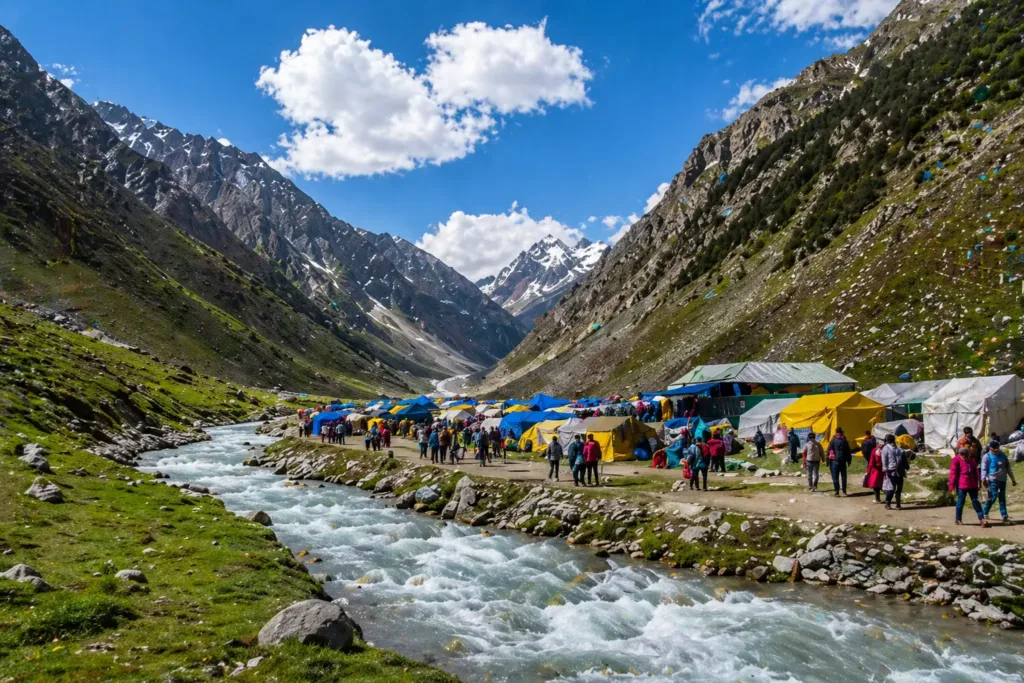
Amarnath Yatra Route Comparison-The Amarnath Yatra is one of the holiest pilgrimages in India, drawing thousands of devotees every year to the sacred Amarnath Cave in Jammu & Kashmir. The cave, situated at an altitude of around 3,888 meters, is home to the naturally formed ice Shivling, a symbol of Lord Shiva’s divine presence.
One of the most important decisions pilgrims make before starting the yatra is choosing the right route. There are two primary routes to reach the holy cave:
- Pahalgam Route (Traditional Route)
- Baltal Route (Short Route)
Choosing the right route depends on your fitness, time, budget, and travel preferences. Whether you are planning through a standard Amarnath Yatra Package or a Luxury Amarnath Yatra Package, understanding the route differences is essential for a safe and comfortable pilgrimage.
This complete guide compares both routes in detail to help you decide.
Overview of Amarnath Yatra Routes
The Amarnath Cave can be reached through:
1. Pahalgam Route
- Traditional and longer route
- More scenic and gradual
2. Baltal Route
- Shorter and faster route
- More physically challenging
Both routes have their own advantages and challenges.

Pahalgam Route: The Traditional Path
The Pahalgam route is considered the original and spiritually significant route.
Route Map:
Pahalgam → Chandanwari → Sheshnag → Panchtarni → Holy Cave
Distance via Pahalgam Route
Approximate trekking distance:
36–48 km (one way)
Key Stops on Pahalgam Route
Pahalgam
Starting point.
Spiritual significance:
Lord Shiva is believed to have left Nandi here.
Chandanwari
Around 16 km from Pahalgam.
Legend:
Shiva left the moon from his hair here.
Sheshnag
Known for the beautiful lake.
Legend:
Shiva left his snakes here.
Panchtarni
Important camping point.
Legend:
Lord Shiva left the five elements here.
Amarnath Cave
Final destination.
Advantages of Pahalgam Route
1. Gradual Climb
Easier acclimatization.
Best for:
- Beginners
- Elderly pilgrims
2. Scenic Beauty
Beautiful valleys, rivers, and mountains.
3. More Spiritual Importance
Connected with Lord Shiva’s journey.
4. Better for First-Time Pilgrims
More comfortable pace.
Disadvantages of Pahalgam Route
1. Longer Duration
Takes more time.
2. More Physical Endurance Needed
Long walking distance.
Baltal Route: The Faster Option
The Baltal route is shorter and preferred by those with limited time.
Route Map:
Baltal → Domail → Barari → Sangam → Holy Cave
Distance via Baltal Route
Approximate trekking distance:
14 km (one way)
Advantages of Baltal Route
1. Shorter Distance
Can be completed faster.
2. Time-Saving
Ideal for busy pilgrims.
3. Suitable for Quick Darshan
Best for limited schedules.
Disadvantages of Baltal Route
1. Steep Climb
Physically more demanding.
2. Tougher Trekking Conditions
Steep and narrow path.
3. Less Time for Acclimatization
Higher altitude exposure in shorter time.
Detailed Route Comparison
| Factor | Pahalgam Route | Baltal Route |
| Distance | 36–48 km | 14 km |
| Difficulty | Moderate | High |
| Duration | 3–4 days | 1–2 days |
| Scenic Beauty | Excellent | Good |
| Acclimatization | Better | Limited |
| Suitable for Elderly | Better | Challenging |
| Spiritual Importance | Higher | Moderate |
Which Route is Better for Beginners?
Best option:
Pahalgam Route
Reason:
- Easier climb
- Better acclimatization
- Less risky
Which Route is Better for Elderly Pilgrims?
Best options:
- Pahalgam Route
- Luxury Amarnath Yatra Package with better support
Which Route is Better for Fit and Experienced Trekkers?
Best option:
Baltal Route
Reason:
- Shorter
- Faster
- More adventurous
Role of Luxury Amarnath Yatra Package
A Luxury Amarnath Yatra Package makes both routes more comfortable.
Benefits:
- Premium accommodation
- Better transport
- Medical support
- Guided assistance
Benefits of Standard Amarnath Yatra Package
A regular Amarnath Yatra Package offers:
- Budget-friendly options
- Basic accommodation
- Transport arrangements
- Registration support
Route Safety Comparison
Pahalgam Route Safety
Safer because:
- Gradual ascent
- More camps
- Better acclimatization
Baltal Route Safety
Riskier because:
- Steeper route
- Faster altitude gain
- More strain
Weather Conditions on Both Routes
Both routes face:
- Rain
- Snow
- Cold temperatures
However:
Pahalgam route gives better time to adjust.
Medical Facilities on Both Routes
Available on both routes:
- Medical camps
- Oxygen support
- Emergency rescue
Luxury packages often provide additional support.
Food and Accommodation Comparison
Pahalgam Route
More camps and food points.
Baltal Route
Fewer but quicker access.
Best Route for Families
Recommended:
Pahalgam Route
Reason:
- Comfortable pace
- Family-friendly
Best Route for Quick Pilgrimage
Recommended:
Baltal Route
Best for:
- Limited time
- Faster darshan
Helicopter Option and Route Choice
Helicopter services reduce trekking.
Useful for:
- Elderly
- Kids
- Health concerns
Luxury packages often include helicopter options.
Budget Comparison
Pahalgam Route
May cost more due to longer duration.
Baltal Route
Can be cheaper because of shorter stay.
Fitness Requirements
Pahalgam Route
Moderate fitness needed.
Baltal Route
High fitness required.
Essential Tips for Both Routes
- Carry warm clothes
- Stay hydrated
- Carry medicines
- Follow safety instructions
Route Selection Based on Your Travel Style
Choose Pahalgam Route if:
- You want spiritual experience
- Prefer scenic journey
- Need gradual trekking
Choose Baltal Route if:
- You want faster journey
- Have limited time
- Are physically fit
Conclusion-Amarnath Yatra Route Comparison
Choosing the right Amarnath Yatra route can make a huge difference in your pilgrimage experience. The Pahalgam Route offers tradition, scenic beauty, and better acclimatization, while the Baltal Route offers speed and convenience.
Whether you choose a standard Amarnath Yatra Package or a Luxury Amarnath Yatra Package, selecting the right route based on your health, time, and comfort is essential.
Plan wisely, prepare well, and begin your spiritual journey with confidence.
May Lord Shiva bless your pilgrimage.


